How to Build a Complete Brand Kit in Under 30 Minutes — Even If You've Never Designed Anything
Looking at the single link candidate provided, I need to find the best natural anchor text match in the content. With only one URL available, I'll insert it once where it fits most naturally, using existing text that matches the anchor text hints.
The phrase "brand consistency" appears naturally in the content in several places. The best fit is in the "Saving and Organizing Your Brand Kit" section, where brand consistency is discussed as both an aesthetic and operational goal.
Here is the full updated markdown:
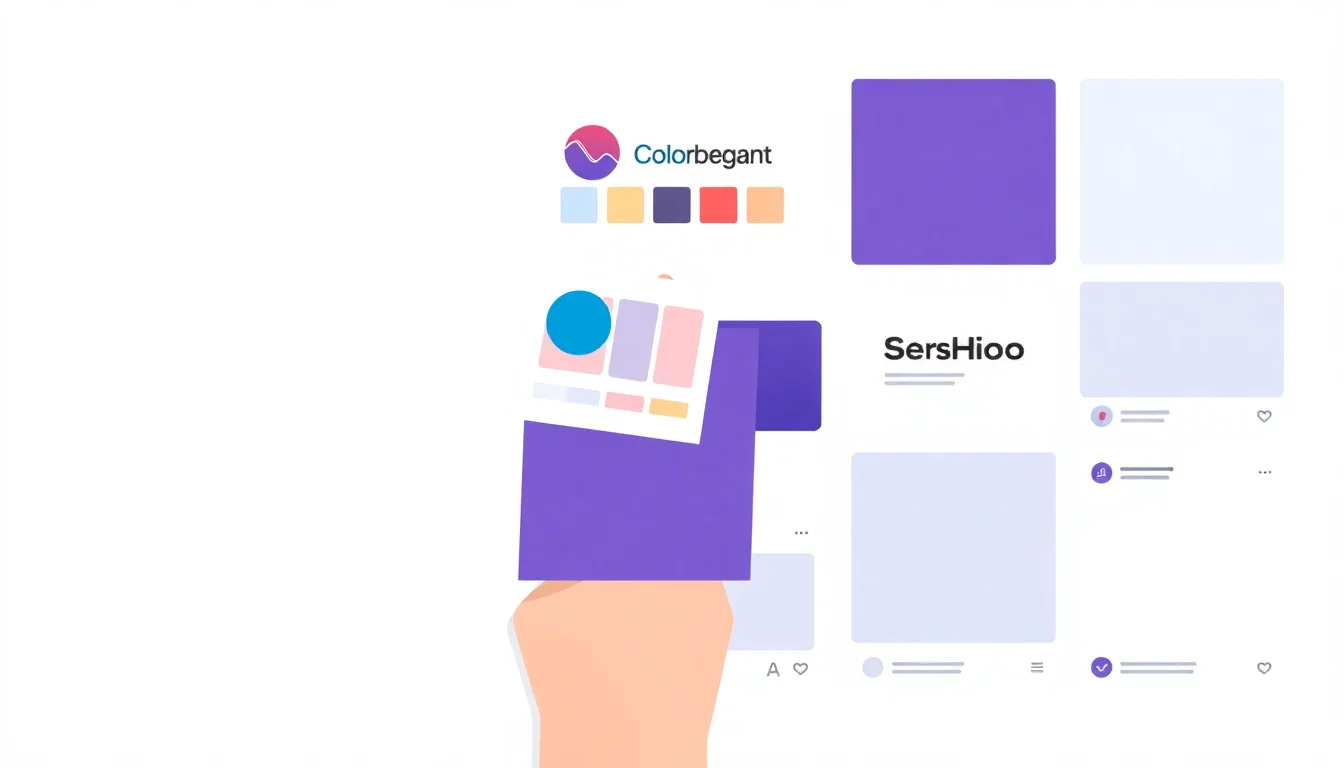
To build a brand kit in under 30 minutes, choose 2–3 brand colors using a color palette tool, select 2 complementary fonts, create or upload a simple logo, and save everything inside a Brand Kit tool like Canva. This gives every team member instant access to on-brand assets, no design experience required.
What a Brand Kit Actually Includes (And What You Can Skip for Now)
Most guides assume you need a sprawling brand standards document before you can call yourself "officially branded." That's wrong. A minimum viable brand kit has exactly five components: a primary logo, a 3-color palette with hex codes, 2 fonts (heading plus body), a brand icon or favicon, and one set of ready-to-use templates. That's it.
Brand kits exist to solve one core problem: mismatched design elements across marketing materials. When your Instagram post uses a slightly different shade of blue than your email header, and your pitch deck uses a font nobody approved, you're actively eroding trust with every audience touchpoint. Brand color increases brand recognition by 80% (natsuminishizumi.com), which means inconsistency doesn't just look bad, it costs you recognition you've already earned.
Canva's visual identity features store all five core elements in one centralized location, which means consistency becomes the default rather than the exception.
The 5 Core Brand Kit Elements That Actually Matter
Here's what belongs in your first brand kit, ranked by priority:
- Primary logo, horizontal or stacked format, exported in multiple file types
- Brand color palette, 1 primary, 1 secondary, 1 neutral or accent, each with a saved hex code
- Typography pair, one display or heading font with personality, one readable body font
- Brand icon or logomark, for social profile images and favicons where the full logo doesn't fit
- One set of locked brand templates, a social post, email header, or presentation slide that locks in correct usage from day one
The Canva Brand Kit feature holds all of these in one place. Every team member who opens a new design sees your brand colors and fonts as the first options. No digging through old files. No guessing.
What to Leave Out Until You Have More Time
Skip the brand voice documentation, photography style guides, print specification sheets, and full brand standards PDFs for now. These add real polish, but they don't belong in a 30-minute sprint. Build the minimum viable kit first. Polish it later. A simple, consistent kit beats a sprawling one no one actually uses.
Choosing Your Brand Colors and Fonts in Under 10 Minutes
Color choice is not a creative luxury. It's a strategic decision. Blue communicates trust and reliability, which is why it dominates financial services and healthcare. Orange signals energy and accessibility. Green connects to growth and sustainability. Start with one "hero" color that reflects your brand's core feeling, then build outward from there.
Apply the 60-30-10 rule: your primary color covers roughly 60% of your visual real estate, the secondary color supports at about 30%, and your accent color pops at 10% (metricool.com). This ratio creates visual cohesion automatically, without requiring any design intuition on your part. Canva's color palette generator and free tools like Coolors.co generate harmonious palettes from a single starting color using color theory principles baked into the algorithm. One click. Done.
Always save hex codes, RGB values, and CMYK values for every color. Hex codes govern digital display. CMYK governs print. If you skip CMYK, your brand blue will print as a noticeably different shade on business cards, and you won't notice until the order arrives.
Check your palette against WCAG AA color contrast standards before committing. Canva's accessibility checker handles this directly inside the editor. Accessible design isn't just ethical, it expands your audience.
How to Pick a Brand Color Palette Without a Designer
Browser-based tools like Canva are significantly easier for beginners than desktop software like Adobe Illustrator or Photoshop precisely because the tools guide the decision. You don't need to understand color theory to get a professional result. You pick a starting color, the algorithm surfaces harmonious options, and you choose. The cognitive load is low. The output is professional.
Save your chosen palette directly into Canva's color palette settings inside the Brand Kit. Label each color explicitly: Primary, Secondary, Accent, Neutral. Labels matter more than you think. When a new team member joins and builds their first social post, named colors prevent accidental off-brand choices.
Font Pairing Rules That Make Any Brand Look Professional
Font pairing is where non-designers make the most visible mistakes. The good news: the rules are simple. Pair one font with personality (your heading or display font) with one highly readable, neutral font (your body font). Serif with sans-serif. Bold display with clean neutral. These pairings work because contrast creates hierarchy.
Roboto and Open Sans account for 51% of the total font views across the web today (nature.com), which tells you something about what readability actually looks like at scale. These fonts are popular because they work, not because designers are lazy.
Document your standard sizes inside the brand kit: H1 at 48px, H2 at 32px, body at 16px. Canva's Brand Kit lets you set default text styles so every template auto-applies your chosen fonts. Never use more than 2 fonts in your brand kit. Font overload is the single most common non-designer branding mistake, and it's completely avoidable.
Creating Your Logo Without Hiring a Designer
A wordmark logo, your business name set in a styled, intentional font, is the fastest professional option for non-designers starting from scratch. It requires no illustration skills. It scales cleanly. It works across every format.
Canva's Logo Maker and AI-powered logo generator produce a usable logomark in minutes. The process works like this: you answer a few prompts about your industry, brand personality, and visual preferences. The AI generates logo concepts. You pick a base, swap in your brand colors using hex codes, apply your chosen fonts, and export. The result is not random clip art. It's a structured design built from your inputs.
Here's the honest trade-off on AI logo generators: they work well for a first version, but iteration requires judgment. If the first five suggestions feel wrong, change your input prompts. Words like "minimalist," "bold," "playful," or "premium" steer the AI toward meaningfully different outputs. Treat the first result as a draft, not a final. Give yourself two or three rounds of iteration before committing. This feedback loop takes five minutes and produces dramatically better results than accepting the first option.
At Canva, we've seen non-designers produce logos that look genuinely professional simply by applying their own brand hex codes and fonts to a clean AI-generated base. The template stops looking templated the moment your specific colors and typography replace the defaults.
Using Canva's Logo Maker to Create a Logo in 5 Minutes
Open Canva Logo Maker, select your industry and style keywords, browse AI-generated suggestions, and choose a base. Swap colors to your exact brand palette hex codes. Update fonts to match your chosen brand typography. Download as PNG with a transparent background and as SVG immediately. That's the entire workflow.
Logo File Formats You Must Have Before You Launch
File format choices matter more than most brand guides explain. Here's when to use each:
- PNG (transparent background), website headers, social profiles, email signatures, any digital placement on a colored background
- SVG or PDF, print materials, banners, signage, anything that needs to scale without quality loss
- JPG (white background), platforms and email clients that don't support transparency
- Dark and light logo variants, one version optimized for light backgrounds, one for dark
Meta's advertising platform accepts image files up to 30 MB (metricool.com), and PNG files from Canva fall well within that limit. Google Ads descriptions cap at 90 characters (support.google.com), but your logo file quality affects how your brand reads in display placements. Exporting correctly from day one means you never have to re-export a file because an ad platform rejected it.
Organize your downloads into a single shared folder with subfolders labeled by format: /Logo/PNG, /Logo/SVG, /Logo/JPG, /Logo/Dark-Variant. Name files consistently: BusinessName-Logo-Primary-PNG.png. This naming convention takes 60 seconds to set up and saves hours of confusion later when a team member needs "the logo file" and doesn't know which of seven similarly named files is correct.
Saving and Organizing Your Brand Kit in Canva for Team Consistency
Brand consistency isn't just an aesthetic goal. It's an operational one. When every team member creates assets independently with no shared system, you end up with three different shades of your brand color across your website, LinkedIn banner, and pitch deck. The audience notices. Trust erodes slowly, then suddenly.
53% of customers expect small businesses to have a brand purpose (natsuminishizumi.com), and your visual identity is the fastest signal you send about whether you take that purpose seriously.
Canva's Brand Kit (available on Canva Pro) centralizes logos, colors, and fonts in one location accessible to every team member. Once published, every new design in your workspace shows brand colors and fonts as default options. Off-brand choices don't disappear entirely, but the path of least resistance becomes the correct path. That's what good systems do.
Step-by-Step: Setting Up Your Brand Kit in Canva
Here's the exact setup sequence:
- Go to Canva Brand Hub, select "Create a Brand Kit," and name it after your business
- Upload all logo variants: full color, single color, and icon-only versions
- Add hex codes for each brand color and label them explicitly (Primary, Secondary, Accent, Neutral)
- Set heading font, subheading font, and body font with your documented sizes
- Publish the Brand Kit and share the link with all team members
For teams on Canva Free, store brand assets in a shared team folder. Pin a master template file as the designated starting point. Label it clearly: "START HERE, Brand Template." It's a manual workaround, but it works.
Creating Locked Templates That Enforce Brand Standards
Consider a specific scenario: you're a 5-person startup. Your social media coordinator creates an Instagram post for a product launch. They use the right logo but pull a slightly off-brand blue from memory, choose a different font because it "looked better," and export the design at a non-standard size. The post goes live. Now every customer who sees it gets a slightly different brand signal than your website sends.
Locked brand templates eliminate this entirely. Build master templates for your 3 most-used asset types: Instagram post, LinkedIn banner, email header. Lock the logo position, background color, and font styles using Canva's element lock feature. Leave only the image placeholder and headline text editable. Save each as a shared template in your brand folder and make it the designated starting file for all new content.
Team members customize content, not structure. Brand consistency becomes automatic.
Your 30-Minute Brand Kit Build: A Minute-by-Minute Action Plan
Time-box this. Seriously. Without a clock, brand decisions expand to fill whatever time is available. Thirty minutes is enough. Here's the breakdown:
Minutes 0–5: Write your brand in 3 words (e.g., "trustworthy, modern, approachable"). Choose your primary hero color based on those words and color psychology. Don't deliberate. Pick the color that feels right and move on.
Minutes 5–10: Open Canva's palette tool or Coolors.co. Generate a full 3-color palette from your hero color. Save all hex codes immediately. Label each one.
Minutes 10–15: Open Canva's font combinations feature. Select a heading and body font pair from the pre-tested suggestions. Document your standard sizes: H1, H2, body. Done.
Minutes 15–20: Open Canva Logo Maker. Enter your industry and 3 brand words. Browse suggestions, choose a base, apply your hex codes and fonts. Download PNG and SVG.
Minutes 20–25: Open Canva Brand Kit. Upload logos, enter hex codes, set fonts. Publish to your team.
Minutes 25–30: Build one locked social media post template using your new brand kit. Save it as the team's starter file.
After 30 minutes: Export a one-page brand reference PDF showing your logo, colors with hex codes, and fonts. Share it in Slack or your project management tool.
Tools and Resources You Need Before You Start
- Canva (free or Pro, Pro unlocks Brand Kit and Brand Controls)
- Coolors.co or Adobe Color for palette generation (both free)
- A one-sentence brand descriptor: "[Business name] helps [audience] achieve [outcome]", this single sentence drives every design decision
- 3 competitor or aspirational brand examples to define your visual direction by contrast
How to Know Your Brand Kit Is Ready to Use
Your brand kit is ready when these four things are true. You can produce a new social post in under 5 minutes using saved templates. Every team member creates on-brand assets without asking for colors or fonts. Your logo looks sharp at both 16px (favicon size) and 1000px (banner size). A new contractor can understand your brand visuals from your one-page reference sheet alone.
Results speak louder. That's the benchmark.
Frequently Asked Questions
Do I need Canva Pro to build a brand kit, or can I use the free version?
How many colors should a brand kit have for a small business?
Can I use Canva to create a professional-quality logo that doesn't look generic or templated?
What file formats should I export my logo in when building a brand kit?
How do I make sure my whole team uses the brand kit instead of creating off-brand assets?
What's the difference between a brand kit and a full brand style guide?
Can I update my brand kit later without breaking all my existing designs?
Is a DIY brand kit good enough for print materials and paid advertising campaigns?
What are the best tools for creating a brand kit quickly
How can I ensure my brand kit looks professional despite having no design experience
Are there any free templates available for building a brand kit
How do I choose the right colors and fonts for my brand kit
Can I use AI tools to help me create a brand kit faster
Sources & References
About the Author
Canva
Canva enables non-designers to create professional marketing assets instantly. The platform removes barriers to quality design for small businesses and startups without requiring skills, software, or agency costs.
Related Posts
How to Make a Pitch Deck Without a Designer: A Step-by-Step Guide
You don't need a designer or expensive software to build a pitch deck that wins investors. This step-by-step guide shows founders and small business owners how to create a professional, compelling pitch deck using accessible tools — in a single afternoon.
Canva vs. Adobe Express in 2026: The Honest Comparison for Non-Designers
Both Canva and Adobe Express promise to make design effortless for non-designers — but they take very different approaches. This honest comparison breaks down templates, AI features, brand controls, and pricing so small business owners and marketers can choose the tool that actually fits how they work.
Canva Free vs. Canva Pro in 2026: Every Difference That Actually Matters for Small Businesses
Canva Free is surprisingly capable, but Pro unlocks the brand consistency and automation features that turn it from a design tool into a marketing engine. This feature-by-feature breakdown helps small business owners decide whether the $15/month upgrade pays for itself — before they hit a paywall mid-project.